Experience the comforting warmth and deep flavors of Vietnamese cuisine with this vegan pho. This plant-based twist on the traditional soup brings together a richly spiced broth infused with star anise, cloves, and cinnamon, complemented by tender vegetables, silky tofu, and fragrant fresh herbs.
Perfect for cozy dinners or anytime you need a nourishing bowl of goodness, this pho balances the hearty umami of shiitake mushrooms and kombu with the brightness of lime and fresh jalapeños. Advance prep is a breeze as the broth develops even more complexity when made ahead.
- Rich, aromatic broth made with wholesome spices and vegetable ingredients for a satisfying depth of flavor.
- Healthy and comforting, with fresh herbs and vegetables for vibrant textures and nutrients.
- Flexible and easy to prepare, with options to make broth in advance, saving time on busy days.
Ingredients
- White onion: Quartered to provide a sweet, caramelized base flavor when charred under the broiler.
- Fresh ginger: Halved lengthwise for a sharp, warming aroma essential to authentic pho broth.
- Star anise: Adds a sweet, licorice-like depth that defines traditional Vietnamese soup fragrance.
- Whole cloves: Provide a warm, slightly spicy undertone that complements the other spices.
- Cinnamon sticks: Impart a delicate, sweet spice crucial for pho’s signature broth flavor.
- Coriander seeds: Toasted to release citrusy notes enhancing the broth’s brightness and complexity.
- Fennel seeds: Contribute a faintly sweet, herbal flavor that rounds out the spice mix.
- Water: The base liquid that carries all the infused flavors into the broth.
- Shiitake mushroom stems: Used for their umami richness, adding depth to the vegan broth.
- Kombu: Dried kelp that boosts savory flavors with natural glutamates, enhancing broth complexity.
- Tamari: A gluten-free soy sauce alternative, bringing salty and savory umami notes to the broth.
- Avocado oil: Used for sautéing mushrooms gently to develop a rich, earthy base.
- Shiitake mushrooms: Thinly sliced to add a meaty texture and earthy flavor in the soup.
- Baby bok choy: Quartered lengthwise for crisp, tender greens adding freshness and color.
- Rice vinegar: Adds tanginess that brightens the vegetables and balances the dish.
- Rice noodles: Traditional pho noodles provide soft, slippery texture to soak the flavorful broth.
- Baked tofu: Protein-rich with a firm texture, soaking up the broth flavor wonderfully.
- Mung bean sprouts (optional): Add a crunchy, fresh contrast when served.
- Jalapeño peppers: Thinly sliced for a spicy kick and added freshness.
- Fresh basil or Thai basil leaves: Offer herbal, slightly sweet aromas essential for authentic pho.
- Fresh cilantro: Provides brightness and freshness to finish the soup.
- Lime wedges: For squeezing over the soup, adding vibrant acidity.
- Sriracha or chili oil: Optional condiments to customize heat and flavor.
Instructions
- Char onion and ginger under broiler
Place onion wedges and ginger cut side up on a foil-lined baking sheet under a high broiler. Char them for 10 to 20 minutes, until well browned and smoky. This caramelization adds complex, sweet flavor to the broth, mimicking traditional pho preparation methods.
- Toast whole spices
Heat a large pot over medium heat and add star anise, cloves, cinnamon sticks, coriander seeds, and fennel seeds. Toast while stirring for 3 minutes or until fragrant. Toasting releases essential oils and deepens the spice flavors, providing a robust base for the broth.
- Simmer broth with veggies and kombu
Add water, the charred onions and ginger, shiitake mushroom stems, kombu, and tamari to the pot. Bring to a simmer and cook gently for 30 minutes. This slow simmer extracts flavors from each ingredient, creating a richly layered broth base.
- Strain the broth
Pour the broth through a fine mesh strainer into a large heatproof bowl to remove solids. Discard all the spices, vegetables, and kombu left in the strainer. Straining ensures a clear, smooth broth ideal for pho.
- Sauté mushrooms and season
Heat avocado oil in a skillet over high heat. Add sliced shiitake mushrooms with a pinch of salt and cook for 4 minutes without stirring much. This technique lets the mushrooms brown and develop a meaty flavor and pleasing texture.
- Cook bok choy with rice vinegar
Arrange bok choy wedges cut side down in the skillet, then cook for 1 minute. Add rice vinegar, cover, and reduce heat to medium. Cook for 5-7 minutes until tender, occasionally stirring. The vinegar brightens the greens, balancing their natural bitterness.
- Prepare rice noodles
Cook the rice noodles according to package instructions until tender but firm. Proper noodle texture is crucial as it absorbs broth flavor while maintaining slight chewiness.
- Assemble the pho bowls
Divide noodles into bowls, top with sautéed mushrooms, bok choy, and baked tofu. Ladle hot broth over to cover. Adding ingredients in this order ensures even heat and flavor distribution for the perfect bowl.
- Garnish and serve
Add optional mung bean sprouts, sliced jalapeños, fresh basil, and cilantro on top. Offer lime wedges, sriracha, and extra tamari for personalized seasoning. These fresh garnishes provide crunch, heat, brightness, and balance to the soup.
- Making the broth a day ahead enhances flavor and saves time on meal day.
- Use gluten-free tamari if avoiding gluten; soy sauce can be a substitute but watch salt levels.
- Adjust spice levels by controlling jalapeño and chili oil additions according to taste.
Storage Tips
Store leftover broth in an airtight container in the fridge for up to one week, or freeze for up to three months. Cooked noodles and toppings are best prepared fresh to retain texture but can be refrigerated separately for 1-2 days.
Serving Suggestions
Enjoy this vegan pho with a side of crispy spring rolls or a light Asian cucumber salad to complement the warm broth and fresh herbs. A refreshing jasmine tea pairs beautifully with the fragrant spices.
- Char spices gently in a dry pan if preferred for a smoky flavor before adding liquids.
- Use good quality dried kombu and fresh mushrooms for maximum umami depth in the broth.
- Heat broth gently after straining; avoid boiling to preserve delicate flavors and clarity.
FAQs
- Can I make this pho without shiitake mushrooms?
Yes, you can substitute with dried porcini or cremini mushrooms for umami. Fresh mushrooms add texture, so consider their role when swapping.
- How can I store leftover pho broth?
Keep broth refrigerated up to 7 days or freeze in portions for up to 3 months. Reheat gently before serving.
- Is this pho gluten-free?
This recipe uses tamari, a gluten-free soy sauce alternative. Always check labels to ensure all ingredients are gluten-free.
- Can I use other noodles instead of rice noodles?
Rice noodles are traditional, but you may use wheat or glass noodles. Adjust cooking times accordingly for best texture.
- How do I adjust spice heat?
Add jalapeños and chili oil gradually, tasting as you go, to control the heat level suited to your preference.
- What can I substitute for baked tofu?
Firm tempeh, seitan, or extra mushrooms can be used as plant-based protein alternatives.
- Can I make the broth vegetarian but not vegan?
Yes, adding a dash of fish sauce or using bone broth is optional for non-vegan versions, but this recipe is designed as fully vegan and flavorful as is.
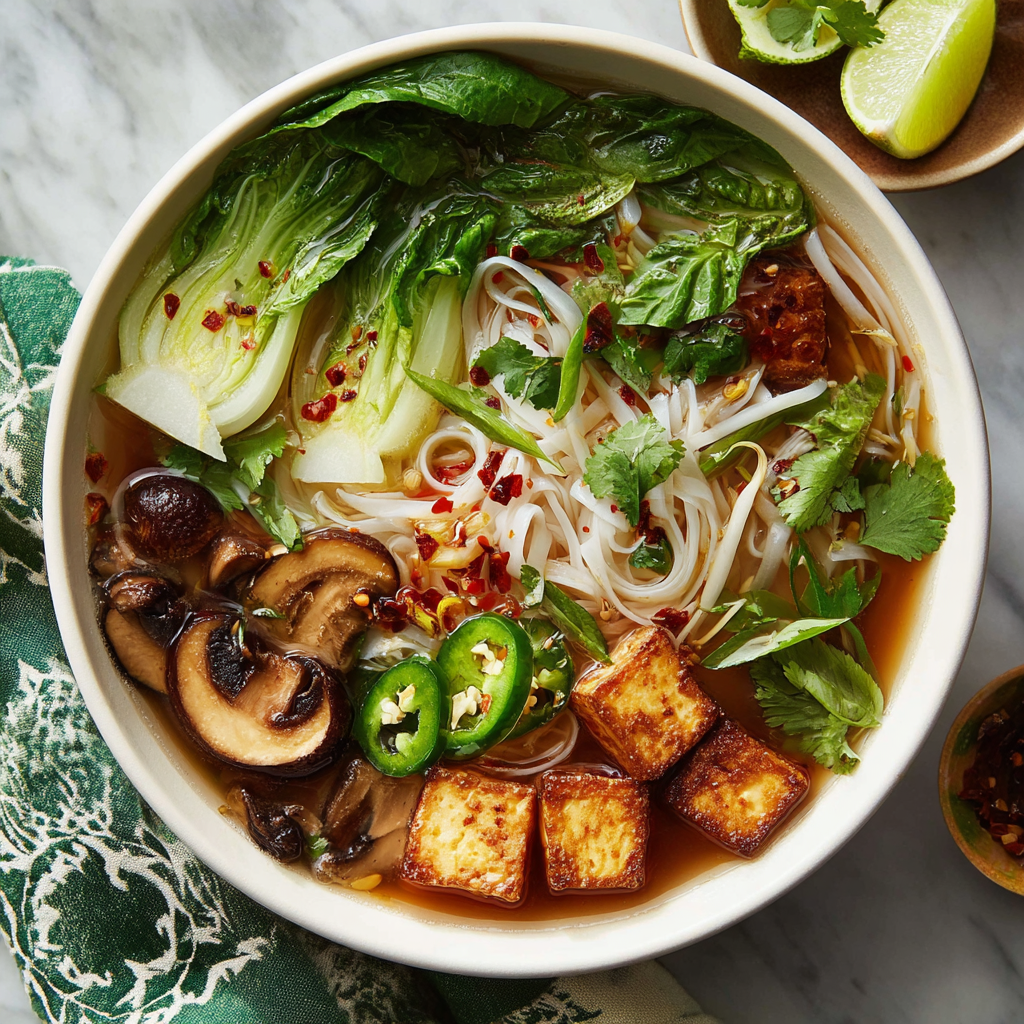
Vegan Pho
Equipment
- 1 oven broiler for charring onion and ginger
- 1 large pot or Dutch oven to simmer broth
- 1 fine mesh strainer to strain broth
- 1 large skillet to cook vegetables
- 1 baking sheet to broil onion and ginger
Ingredients
- 1 white onion quartered
- 1 3-inch piece fresh ginger, halved lengthwise
- 4 star anise
- 4 whole cloves
- 2 cinnamon sticks
- 1 teaspoon coriander seeds
- ½ teaspoon fennel seeds
- 8 cups water
- stems from 8 ounces shiitake mushrooms
- 1 4-inch piece kombu
- ¼ cup tamari plus more for serving
- 2 tablespoons avocado oil
- 8 ounces shiitake mushrooms stemmed and sliced
- sea salt to taste
- 2 baby bok choy quartered lengthwise
- 2 teaspoons rice vinegar
- 8 ounces rice noodles
- baked tofu
- mung bean sprouts optional
- 2 jalapeño peppers stemmed and thinly sliced
- fresh basil or Thai basil leaves
- fresh cilantro
- lime wedges for serving
- sriracha or chili oil for serving
Instructions
- Preheat the oven broiler to high and line a baking sheet with foil.
- Place the onion wedges and ginger, cut side up, on the baking sheet and broil 10 to 20 minutes until charred; remove ginger earlier if done.
- Heat a large pot or Dutch oven over medium heat and toast star anise, cloves, cinnamon sticks, coriander, and fennel seeds for 3 minutes until fragrant.
- Add water, charred onions, ginger, mushroom stems, kombu, and tamari to the pot and simmer for 30 minutes.
- Strain the broth through a fine mesh strainer into a large heatproof bowl, discarding solids.
- In a large skillet over high heat, heat avocado oil and cook shiitake mushrooms with salt for 4 minutes until browned.
- Add bok choy wedges cut side down; cook 1 minute, add rice vinegar, cover, reduce heat to medium, and cook 5 to 7 minutes until tender, adding water if dry.
- Prepare rice noodles according to package instructions and divide among four bowls.
- Add cooked mushrooms, bok choy, and baked tofu to bowls, then ladle hot broth over to cover.
- Top with bean sprouts (if using), jalapeños, basil, and cilantro; serve with lime wedges, sriracha, and additional tamari.
Notes
- Make broth ahead; stores in fridge up to 1 week or freezer 3 months.
- Adjust toppings to preference for spice and freshness.
- Use tamari for gluten-free option.