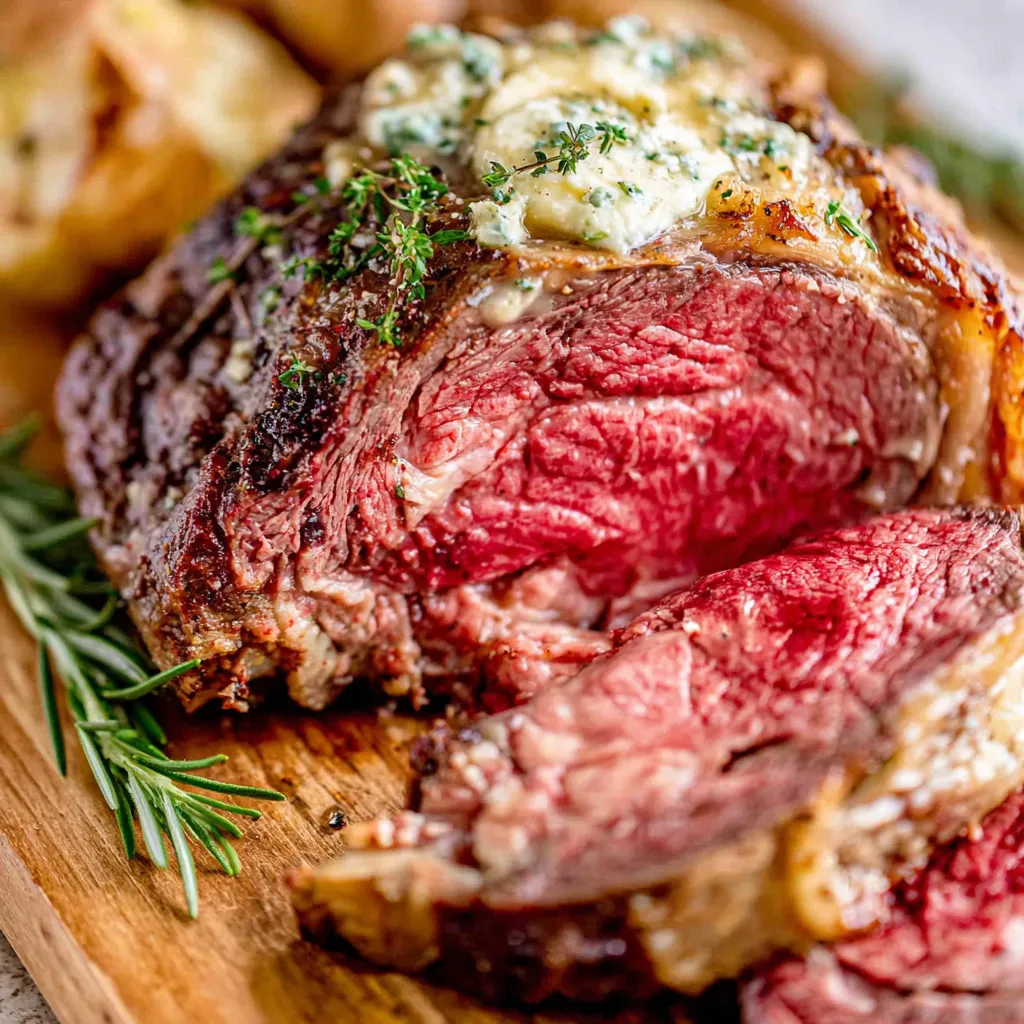
Okay, so imagine spending a ridiculous amount of money on a massive piece of beef, seasoning it with basically just salt and pepper, throwing it in the oven, and somehow ending up with the most succulent, tender, perfectly cooked roast that makes everyone at your table question whether you’ve been secretly training with Gordon Ramsay. That’s prime rib. This isn’t just dinner—it’s a STATEMENT. We’re talking about a beautifully marbled standing rib roast with a crispy, herb-crusted exterior and a perfectly pink, juicy interior that’s so tender you barely need a knife. It’s the kind of meal that makes holidays feel special and turns regular Sundays into celebrations. I made this for Christmas dinner once and my uncle literally stood up and slow-clapped. Another time I served it for a birthday dinner and someone proposed to their partner at the table (unrelated to the roast, but the roast definitely set the mood). This recipe has POWER.
Why You’ll Love This Recipe
Shockingly simple. For something this impressive, it’s almost offensively easy. Season, roast, rest. That’s it.
Perfect every time. Follow the method and you’ll get that ideal medium-rare center with a crusty exterior. It’s basically foolproof.
Feeds a crowd. One roast serves 6-8 people, making it perfect for holidays and celebrations.
Minimal hands-on time. Most of the cooking is passive. You can drink wine and socialize while it roasts.
Leftovers are gold. Prime rib sandwiches, beef and eggs, stroganoff—the gift that keeps giving.
Special occasion worthy. This is THE centerpiece for Christmas, New Year’s, Easter, or any day you want to feel fancy.
The Good Stuff You’ll Need
For the Prime Rib:
- 1 bone-in prime rib roast (also called standing rib roast), 4-6 pounds
- This will serve 6-8 people (figure about 1 pound per person with bones)
- Choose a roast with good marbling—fat = flavor
- Ask your butcher to French the bones (clean them) for presentation
For the Seasoning:
- 3-4 tbsp kosher salt
- 2 tbsp coarsely ground black pepper
- 6-8 cloves garlic, minced or smashed
- 3 tbsp fresh rosemary, chopped (or 1 tbsp dried)
- 2 tbsp fresh thyme leaves (or 1 tsp dried)
- 2 tbsp olive oil or softened butter
- Optional: 1 tsp garlic powder, 1 tsp onion powder
For the Au Jus (Optional but Highly Recommended):
- Drippings from the roast
- 2 cups beef broth
- 1/2 cup red wine (optional)
- 2 tbsp butter
- Salt and pepper to taste
For Serving:
- Horseradish cream (mix prepared horseradish with sour cream or crème fraîche)
- Fresh herbs for garnish
Equipment:
- Roasting pan with a rack (ESSENTIAL—you need air circulation)
- Meat thermometer (also essential unless you enjoy overcooked expensive meat)
- Aluminum foil for tenting
- Sharp carving knife
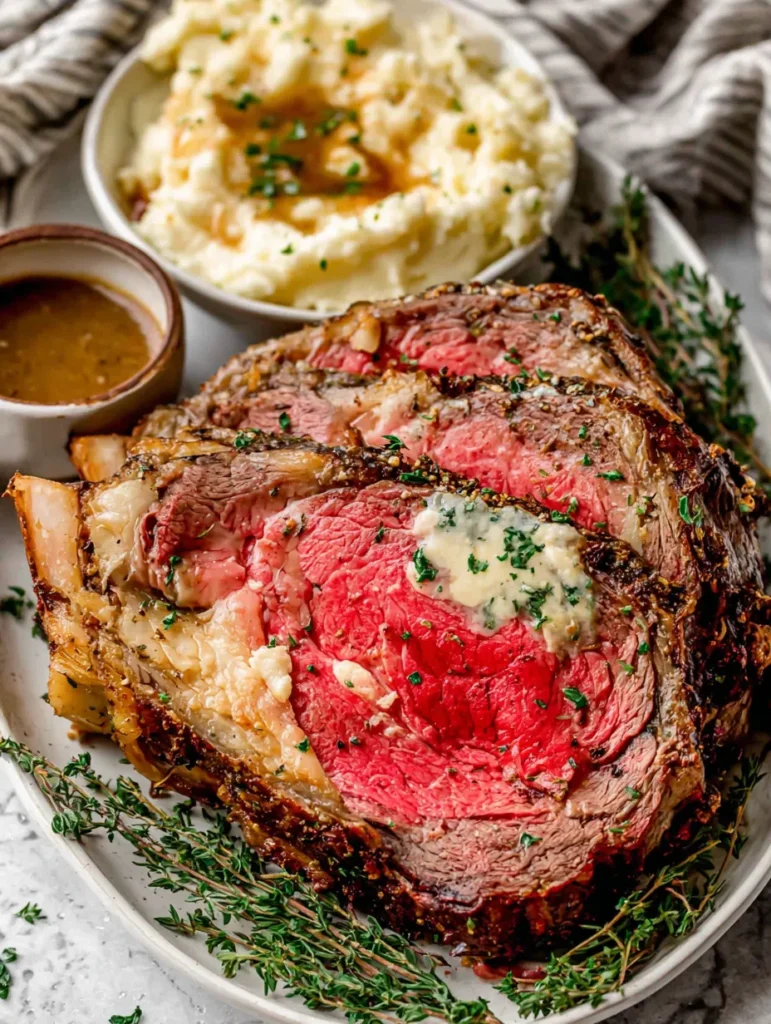
Let’s Do This
Step 1: Prep the Roast (Day Before if Possible)
Remove the roast from the fridge and any packaging. Pat it COMPLETELY dry with paper towels. Moisture is the enemy of a good crust.
If your roast is tied, leave it tied. If not, tie it with kitchen twine at 2-inch intervals to help it maintain shape.
Place the roast on a wire rack set over a baking sheet or plate.
In a small bowl, mix together salt, pepper, garlic, rosemary, thyme, and olive oil to make a paste.
Rub this mixture ALL OVER the roast—top, bottom, sides, between the bones. Really massage it in there. Get intimate with your meat.
Place the roast UNCOVERED in the fridge overnight (or at least 4 hours). This dry-brining process seasons the meat deeply and dries the exterior for better crust formation.
If you don’t have time for overnight, let it sit at room temp for 2 hours before roasting, but overnight is better.
Step 2: Bring to Room Temperature
Remove the roast from the fridge 2-3 hours before cooking. Yes, 2-3 HOURS.
Cold meat doesn’t cook evenly. Room temp meat = even cooking = perfect results.
Place it on the counter (still on the rack) and let it come to room temperature.
Don’t worry about food safety—large roasts are fine at room temp for this amount of time.
Step 3: Start with High Heat (The Reverse Sear Method)
Preheat oven to 450°F (230°C). Yes, HIGH heat to start.
Place the roast bone-side down on a roasting rack in a roasting pan. The bones act as a natural roasting rack.
Roast at 450°F for 20 minutes. This creates that beautiful brown crust.
Your kitchen will get smoky. This is normal. Open a window, turn on the fan, accept it.
After 20 minutes, reduce oven temperature to 325°F (160°C) WITHOUT opening the door. Just turn the temp down and leave it.
Step 4: Low and Slow to Finish
Continue roasting at 325°F until the internal temperature reaches your desired doneness.
Use a meat thermometer inserted into the thickest part of the meat (not touching bone).
Temperature Guide:
- Rare: 120-125°F (not recommended for prime rib)
- Medium-rare: 130-135°F (PERFECT—this is the goal)
- Medium: 135-145°F (still acceptable)
- Medium-well: 145-155°F (why would you do this?)
- Well done: 155°F+ (please don’t)
Time estimates: About 15-20 minutes per pound at 325°F, but USE A THERMOMETER. Every oven and roast is different.
For a 5-pound roast, expect about 1.5-2 hours total cooking time after the initial high-heat sear.
Step 5: Rest (This is NOT Optional)
When the roast reaches 130°F (for medium-rare), remove it from the oven.
Tent loosely with aluminum foil.
Let it rest for AT LEAST 20-30 minutes. For a large roast, even 45 minutes is fine.
The internal temp will rise another 5-10 degrees during resting (carryover cooking). This is why you pull it at 130°F for a final temp of 135-140°F.
Resting allows the juices to redistribute. Cut it too early and all those beautiful juices run out onto the cutting board instead of staying in the meat.
Do NOT skip this step. I’m serious. Set a timer. Walk away. Have a drink.
Step 6: Make the Au Jus (While Resting)
Pour the drippings from the roasting pan into a fat separator or measuring cup. Let fat rise to the top.
In a small saucepan over medium heat, combine the defatted drippings with beef broth and red wine (if using).
Simmer for 5-10 minutes to reduce slightly and concentrate flavors.
Whisk in butter at the end for richness and shine.
Season with salt and pepper to taste.
Strain through a fine-mesh sieve if there are any bits you want to remove.
Keep warm until serving.
Step 7: Carve and Serve
Place the roast on a cutting board. Remove the twine if tied.
For bone-in roasts: Slice along the bones to remove them completely, then slice the meat into 1/2 to 3/4-inch thick slices.
Or, cut between the bones to create individual bone-in portions—these look super impressive.
Arrange on a serving platter, garnish with fresh herbs.
Serve immediately with au jus and horseradish cream on the side.
Watch as everyone loses their minds over how perfect it is.
Serving Suggestions
Prime rib is the star, but here’s how to support it:
- Classic: Horseradish cream or prepared horseradish
- Yorkshire pudding (traditional British accompaniment)
- Roasted garlic mashed potatoes
- Creamed spinach
- Roasted Brussels sprouts with bacon
- Green beans almondine
- Roasted root vegetables
- Caesar salad
- Au gratin potatoes
- Crusty bread for soaking up au jus
Switch It Up
Herb-Crusted: Add more fresh herbs like oregano, sage, or parsley to the rub.
Garlic Lover’s: Stud the roast with whole garlic cloves by making small slits and inserting them.
Spicy: Add cayenne pepper or red pepper flakes to the rub for a kick.
Coffee-Rubbed: Add 2 tbsp finely ground coffee to the spice rub for depth.
Asian-Inspired: Use a rub of soy sauce, ginger, garlic, and five-spice powder.
Mustard-Crusted: Slather with Dijon mustard before applying the herb rub.
Smoked: Cook on a smoker at 225°F until it reaches desired temp for incredible flavor.
Storage and Leftover Magic
Prime rib leftovers are actually AMAZING and worth planning for.
Refrigerate: Store wrapped tightly for up to 4 days. Slice only what you need and keep the rest in larger pieces to prevent drying out.
Freeze: Wrap slices individually in plastic wrap, then foil, then place in freezer bags. Freeze for up to 3 months.
Reheat gently: Place slices in au jus in a covered pan over low heat, or warm in a 250°F oven covered with foil. Don’t microwave—it’ll overcook and dry out.
Leftover ideas:
- Prime rib sandwiches with horseradish mayo
- Beef stroganoff
- Prime rib hash with eggs for breakfast
- French dip sandwiches
- Beef and barley soup
- Steak and eggs
- Philly cheesesteaks
- Beef fried rice
Why This Works So Damn Well
Prime rib is actually simple once you understand the science.
Starting with high heat creates the Maillard reaction—browning that develops complex, savory flavors and that beautiful crust.
Finishing with low heat cooks the interior gently and evenly without overcooking the outer portions.
Room temp meat before cooking ensures even cooking from edge to center. Cold meat = overcooked exterior, raw center.
Dry-brining overnight seasons deeply and dries the surface for better browning. Wet surfaces steam instead of brown.
The bones act as a natural rack and insulator, protecting the meat from direct heat and adding flavor.
Resting is crucial because muscle fibers relax and reabsorb juices. Cut too early = juice loss = dry meat.
Using a thermometer removes guesswork. Ovens vary, roast sizes vary, but internal temp doesn’t lie.
Carryover cooking means the temp rises 5-10°F after removing from heat, so you pull it early to account for this.
When to Make This
Christmas Dinner: The ultimate holiday centerpiece. This IS Christmas dinner.
New Year’s Eve: Start the year right with the most luxurious roast imaginable.
Easter Sunday: Traditional and impressive for spring celebrations.
Thanksgiving Alternative: For people who are over turkey and want something special.
Anniversary Dinner: Nothing says “I love you” like perfectly cooked prime rib.
Birthday Celebration: Make someone feel VERY special with this showstopper.
Super Bowl Party: If you want to absolutely dominate the potluck game.
Questions People Actually Ask
Q: My roast is overcooked and dry. What happened? A: You either didn’t use a thermometer, or you ignored it. Always use a thermometer and pull it at 130°F for medium-rare.
Q: The outside is perfect but the inside is raw. Why? A: The roast wasn’t at room temp before cooking. Always let it sit out for 2-3 hours first.
Q: Do I really need to rest it that long? A: YES. Resting is not optional. It’s the difference between juicy perfection and juice running all over your cutting board.
Q: Can I cook this without bones? A: Yes, a boneless rib roast works. Tie it well and expect slightly faster cooking time.
Q: My crust isn’t forming. What’s wrong? A: The surface was too wet. Always pat completely dry and ideally dry-brine overnight uncovered in the fridge.
Q: How do I know what size roast to buy? A: Figure 1 pound per person with bones, or 3/4 pound per person boneless. So for 8 people, get a 6-8 pound bone-in roast.
Q: Can I cook this the day before and reheat? A: You CAN, but it won’t be as good. Prime rib is best served fresh. If you must, reheat very gently in au jus.
Q: What’s the difference between prime rib and ribeye? A: Same cut. Ribeye is the steak version (sliced), prime rib is the whole roast. Both come from the rib section.
Q: My butcher is asking if I want “choice” or “prime.” Which do I want? A: “Prime” grade has more marbling and is more expensive but more flavorful. “Choice” is still excellent and more affordable. Either works.
Print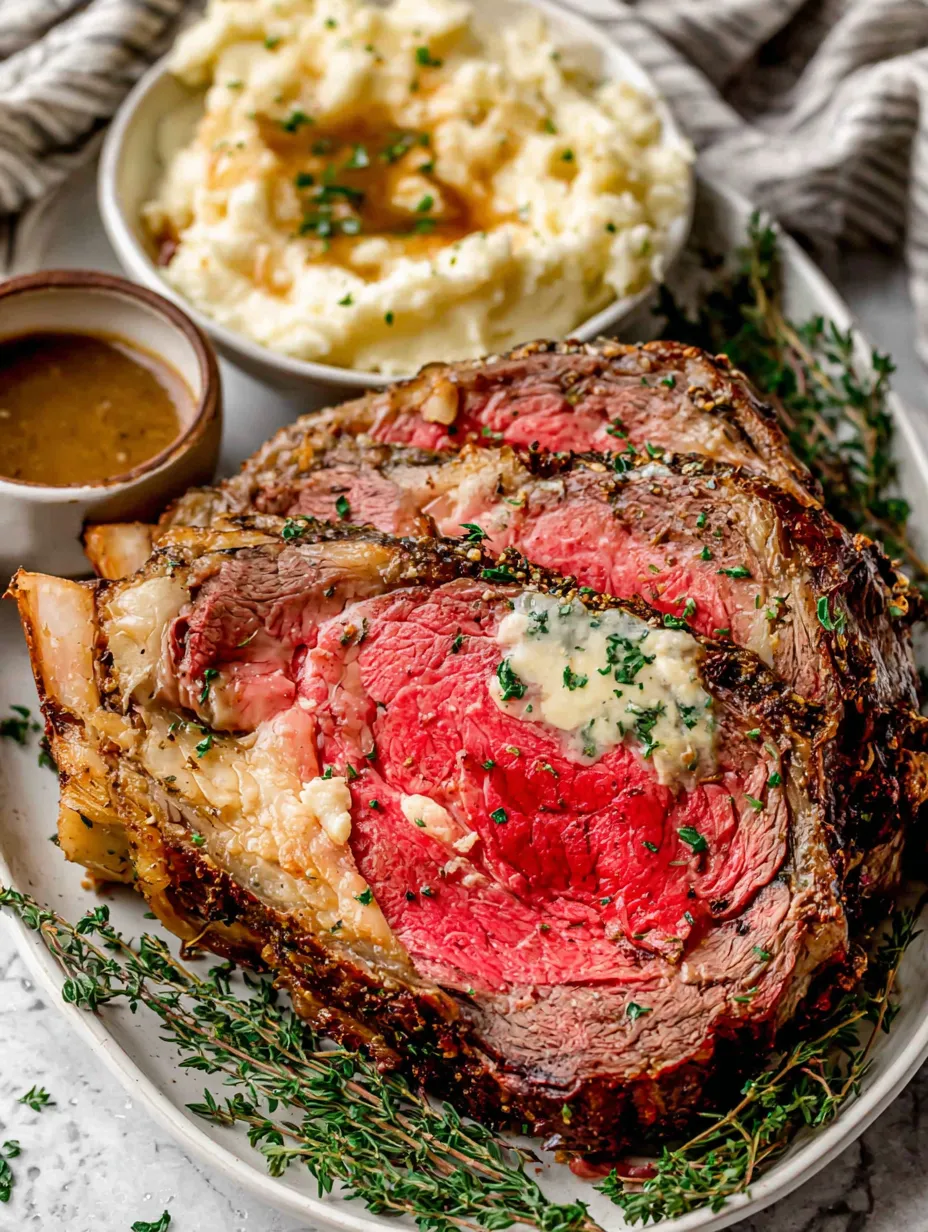
Prime Rib Recipe To Impress Your Guests
- Total Time: 3 hours
- Yield: 6–8 servings 1x
Description
Okay, so imagine spending a ridiculous amount of money on a massive piece of beef, seasoning it with basically just salt and pepper, throwing it in the oven, and somehow ending up with the most succulent, tender, perfectly cooked roast that makes everyone at your table question whether you’ve been secretly training with Gordon Ramsay. That’s prime rib. This isn’t just dinner—it’s a STATEMENT. We’re talking about a beautifully marbled standing rib roast with a crispy, herb-crusted exterior and a perfectly pink, juicy interior that’s so tender you barely need a knife. It’s the kind of meal that makes holidays feel special and turns regular Sundays into celebrations. I made this for Christmas dinner once and my uncle literally stood up and slow-clapped. Another time I served it for a birthday dinner and someone proposed to their partner at the table (unrelated to the roast, but the roast definitely set the mood). This recipe has POWER.
Ingredients
For the Prime Rib:
- 1 bone-in prime rib roast (also called standing rib roast), 4-6 pounds
- This will serve 6-8 people (figure about 1 pound per person with bones)
- Choose a roast with good marbling—fat = flavor
- Ask your butcher to French the bones (clean them) for presentation
For the Seasoning:
- 3–4 tbsp kosher salt
- 2 tbsp coarsely ground black pepper
- 6–8 cloves garlic, minced or smashed
- 3 tbsp fresh rosemary, chopped (or 1 tbsp dried)
- 2 tbsp fresh thyme leaves (or 1 tsp dried)
- 2 tbsp olive oil or softened butter
- Optional: 1 tsp garlic powder, 1 tsp onion powder
For the Au Jus (Optional but Highly Recommended):
- Drippings from the roast
- 2 cups beef broth
- 1/2 cup red wine (optional)
- 2 tbsp butter
- Salt and pepper to taste
For Serving:
- Horseradish cream (mix prepared horseradish with sour cream or crème fraîche)
- Fresh herbs for garnish
Equipment:
- Roasting pan with a rack (ESSENTIAL—you need air circulation)
- Meat thermometer (also essential unless you enjoy overcooked expensive meat)
- Aluminum foil for tenting
- Sharp carving knife
Instructions
Step 1: Prep the Roast (Day Before if Possible)
Remove the roast from the fridge and any packaging. Pat it COMPLETELY dry with paper towels. Moisture is the enemy of a good crust.
If your roast is tied, leave it tied. If not, tie it with kitchen twine at 2-inch intervals to help it maintain shape.
Place the roast on a wire rack set over a baking sheet or plate.
In a small bowl, mix together salt, pepper, garlic, rosemary, thyme, and olive oil to make a paste.
Rub this mixture ALL OVER the roast—top, bottom, sides, between the bones. Really massage it in there. Get intimate with your meat.
Place the roast UNCOVERED in the fridge overnight (or at least 4 hours). This dry-brining process seasons the meat deeply and dries the exterior for better crust formation.
If you don’t have time for overnight, let it sit at room temp for 2 hours before roasting, but overnight is better.
Step 2: Bring to Room Temperature
Remove the roast from the fridge 2-3 hours before cooking. Yes, 2-3 HOURS.
Cold meat doesn’t cook evenly. Room temp meat = even cooking = perfect results.
Place it on the counter (still on the rack) and let it come to room temperature.
Don’t worry about food safety—large roasts are fine at room temp for this amount of time.
Step 3: Start with High Heat (The Reverse Sear Method)
Preheat oven to 450°F (230°C). Yes, HIGH heat to start.
Place the roast bone-side down on a roasting rack in a roasting pan. The bones act as a natural roasting rack.
Roast at 450°F for 20 minutes. This creates that beautiful brown crust.
Your kitchen will get smoky. This is normal. Open a window, turn on the fan, accept it.
After 20 minutes, reduce oven temperature to 325°F (160°C) WITHOUT opening the door. Just turn the temp down and leave it.
Step 4: Low and Slow to Finish
Continue roasting at 325°F until the internal temperature reaches your desired doneness.
Use a meat thermometer inserted into the thickest part of the meat (not touching bone).
Temperature Guide:
- Rare: 120-125°F (not recommended for prime rib)
- Medium-rare: 130-135°F (PERFECT—this is the goal)
- Medium: 135-145°F (still acceptable)
- Medium-well: 145-155°F (why would you do this?)
- Well done: 155°F+ (please don’t)
Time estimates: About 15-20 minutes per pound at 325°F, but USE A THERMOMETER. Every oven and roast is different.
For a 5-pound roast, expect about 1.5-2 hours total cooking time after the initial high-heat sear.
Step 5: Rest (This is NOT Optional)
When the roast reaches 130°F (for medium-rare), remove it from the oven.
Tent loosely with aluminum foil.
Let it rest for AT LEAST 20-30 minutes. For a large roast, even 45 minutes is fine.
The internal temp will rise another 5-10 degrees during resting (carryover cooking). This is why you pull it at 130°F for a final temp of 135-140°F.
Resting allows the juices to redistribute. Cut it too early and all those beautiful juices run out onto the cutting board instead of staying in the meat.
Do NOT skip this step. I’m serious. Set a timer. Walk away. Have a drink.
Step 6: Make the Au Jus (While Resting)
Pour the drippings from the roasting pan into a fat separator or measuring cup. Let fat rise to the top.
In a small saucepan over medium heat, combine the defatted drippings with beef broth and red wine (if using).
Simmer for 5-10 minutes to reduce slightly and concentrate flavors.
Whisk in butter at the end for richness and shine.
Season with salt and pepper to taste.
Strain through a fine-mesh sieve if there are any bits you want to remove.
Keep warm until serving.
Step 7: Carve and Serve
Place the roast on a cutting board. Remove the twine if tied.
For bone-in roasts: Slice along the bones to remove them completely, then slice the meat into 1/2 to 3/4-inch thick slices.
Or, cut between the bones to create individual bone-in portions—these look super impressive.
Arrange on a serving platter, garnish with fresh herbs.
Serve immediately with au jus and horseradish cream on the side.
Watch as everyone loses their minds over how perfect it is.
Notes
Prime rib is the star, but here’s how to support it:
- Classic: Horseradish cream or prepared horseradish
- Yorkshire pudding (traditional British accompaniment)
- Roasted garlic mashed potatoes
- Creamed spinach
- Roasted Brussels sprouts with bacon
- Green beans almondine
- Roasted root vegetables
- Caesar salad
- Au gratin potatoes
- Crusty bread for soaking up au jus
- Prep Time: 15 minutes
- Cook Time: 2-2.5 hours
- Cuisine: American
Nutrition
- Calories: 851kcal
- Sodium: ~620mg
- Fat: 35g
- Trans Fat: 1g
- Carbohydrates: ~7g
- Fiber: 1g
- Protein: ~1g
- Cholesterol: 125mg