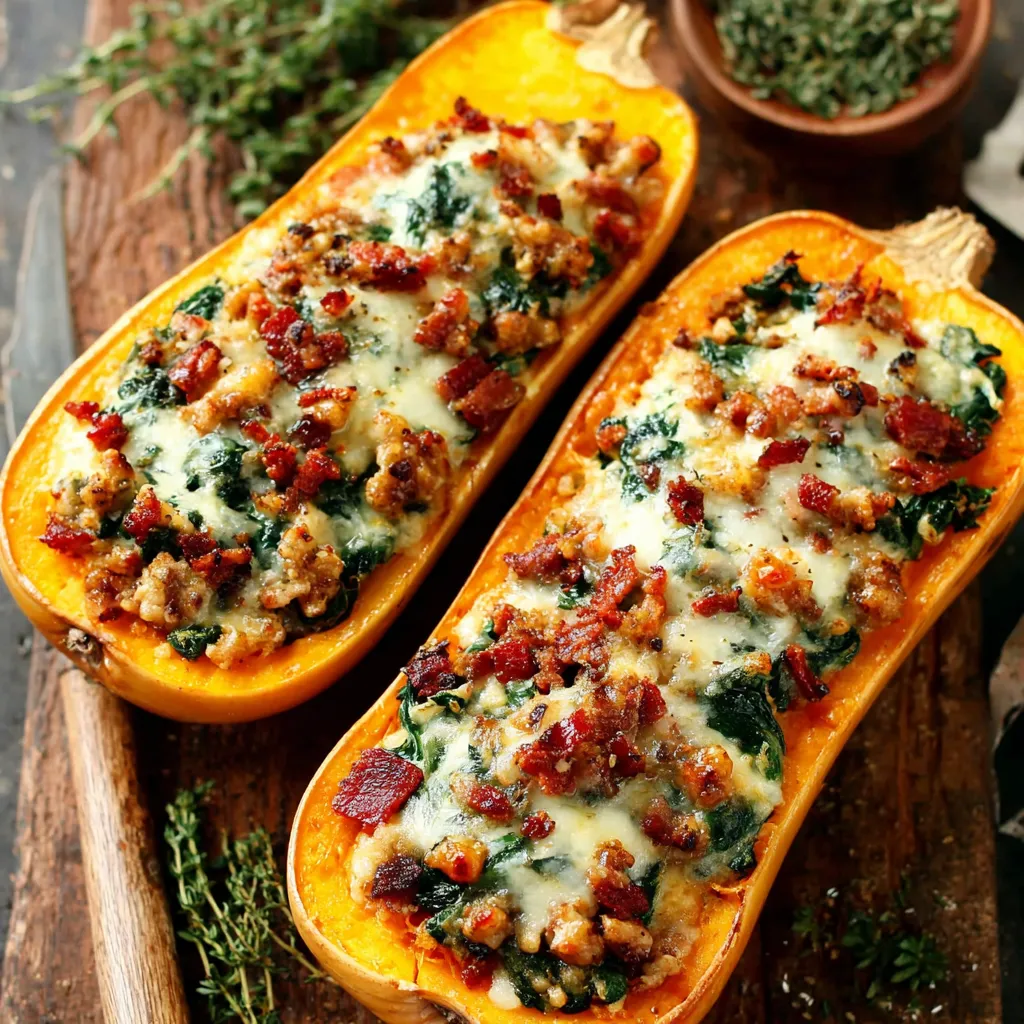
Alright, so imagine fall had a baby with comfort food and then that baby went to culinary school. That’s what we’re dealing with here. Stuffed Butternut Squash is basically taking those gorgeous orange gourds, roasting them until they’re caramelized and tender, then filling them with a savory mixture of quinoa (or rice, we’re flexible here), cranberries, pecans, and whatever other deliciousness your heart desires. It’s like edible autumn decoration that you can actually eat instead of just putting on your porch. I made this for Thanksgiving once as a vegetarian option and three meat-eaters fought over the last half. One of them was my dad, who once said vegetables were “just a waste of stomach space.” That’s the kind of conversion power this dish has.
Why You’ll Love This Recipe
Looks stupidly impressive. Serving food IN a squash? That’s some Food Network level presentation right there.
Vegetarian-friendly powerhouse. Packed with protein and actually fills you up. No sad salad energy here.
Make-ahead magic. Roast the squash and make the filling ahead. Just stuff and reheat when ready.
Meal prep champion. These reheat beautifully and make lunch feel fancy all week.
Customizable as hell. Don’t like quinoa? Use rice. Hate cranberries? Swap raisins. You’re the boss.
Holiday table star. Perfect for Thanksgiving when you need something that’s not turkey but still feels festive.
The Good Stuff You’ll Need
For the Squash:
- 2 medium butternut squash (about 2-3 lbs each)
- 2 tbsp olive oil
- Salt and black pepper
- 1/2 tsp cinnamon (optional, but it adds that fall vibe)
For the Filling:
- 1 cup quinoa (or wild rice, farro, or regular rice—whatever floats your boat)
- 2 cups vegetable or chicken broth
- 2 tbsp olive oil or butter
- 1 medium onion, diced
- 3 cloves garlic, minced
- 2 cups chopped kale or spinach (stems removed)
- 1/2 cup dried cranberries
- 1/2 cup chopped pecans or walnuts, toasted
- 1/2 cup crumbled goat cheese or feta (optional but highly recommended)
- 1 tsp dried sage (or 1 tbsp fresh, chopped)
- 1/2 tsp dried thyme
- 1/4 tsp nutmeg
- Salt and pepper to taste
- 2 tbsp maple syrup (for that sweet-savory thing)
- Juice of half a lemon
For Topping:
- Extra goat cheese or feta
- Chopped fresh parsley or sage
- Drizzle of balsamic glaze (optional but fancy)
- More toasted nuts
Let’s Do This
Step 1: Prep Those Squashes
Preheat oven to 400°F (200°C). Line a large baking sheet with parchment paper.
Cut each butternut squash in half lengthwise. This requires a sharp knife and some confidence. If the squash is being stubborn, microwave it for 2-3 minutes to soften slightly.
Scoop out the seeds and stringy bits with a spoon. Save the seeds if you want to roast them later—they’re like nature’s pepitas.
Brush the cut sides with olive oil and season generously with salt, pepper, and cinnamon if using.
Place cut-side down on the baking sheet.
Roast for 35-45 minutes until the flesh is fork-tender and starting to caramelize. The exact time depends on the size of your squash.
Flip them cut-side up for the last 5 minutes to let the edges get a little crispy.
Step 2: Make the Filling
While the squash is roasting, cook your quinoa (or grain of choice) according to package directions, using broth instead of water for extra flavor. Usually it’s 1 cup quinoa to 2 cups liquid, brought to a boil, then simmered covered for 15 minutes. Fluff with a fork and set aside.
Heat olive oil or butter in a large skillet over medium heat.
Add diced onion and cook for 5-7 minutes until soft and translucent.
Add garlic and cook for another minute until fragrant. Your kitchen should smell amazing right now.
Toss in the chopped kale or spinach and cook until wilted, about 3-4 minutes.
Add cooked quinoa, cranberries, toasted pecans, sage, thyme, nutmeg, salt, and pepper. Stir everything together.
Drizzle in maple syrup and lemon juice. The sweet and tangy combo is chef’s kiss.
Remove from heat and fold in the goat cheese if using. It’ll get all melty and creamy. This is correct.
Taste and adjust seasoning. Don’t be shy with the salt—grains need love.
Step 3: Stuff Like You Mean It
Once the squash halves are done roasting, use a fork to gently fluff up the flesh inside, creating little ridges. This helps the filling stick and adds more texture.
Pile the filling generously into each squash half. Really pack it in there—more is more.
Top with extra goat cheese or feta if you’re feeling it.
Return to the oven for 10-15 minutes to heat everything through and get a little golden on top.
Step 4: Finish and Serve
Pull these beauties out of the oven and let them cool for a few minutes.
Top with fresh herbs, extra toasted nuts, and a drizzle of balsamic glaze if you’re getting fancy.
Serve whole halves for a dramatic presentation, or slice each half into 2-3 pieces for easier eating.
Stand back and accept the inevitable compliments.
Serving Suggestions
These are pretty much a complete meal, but if you want to round things out:
- Serve with a simple arugula salad dressed in lemon vinaigrette
- Add a side of roasted Brussels sprouts or green beans
- Pair with crusty bread for soaking up any extra filling
- Drizzle with tahini sauce for a Middle Eastern twist
- Top with a fried egg for breakfast-for-dinner vibes
Switch It Up
Meat Lover Version: Add cooked Italian sausage, ground turkey, or shredded chicken to the filling.
Mediterranean Style: Use farro instead of quinoa, add sun-dried tomatoes, olives, and feta cheese. Skip the cranberries and maple syrup.
Mexican-Inspired: Season with cumin and chili powder, add black beans, corn, and top with pepper jack cheese and cilantro.
Harvest Version: Add diced apples, use wild rice, and double down on the sage for that Thanksgiving energy.
Vegan Friendly: Skip the cheese or use vegan cheese. Add nutritional yeast to the filling for umami flavor.
Nutty Professor: Try different nuts like almonds, hazelnuts, or pistachios for different flavor profiles.
Grain-Free: Use riced cauliflower instead of quinoa for a lighter, low-carb option.
Make-Ahead Tips
This is actually one of those dishes that LOVES being made ahead. The flavors get better as they sit.
Roast the squash up to 2 days ahead. Store covered in the fridge.
Make the filling up to 3 days ahead. Store separately in an airtight container.
Stuff the squash and refrigerate for up to 24 hours before the final baking.
To reheat, cover with foil and bake at 350°F for 20-25 minutes until heated through.
You can freeze the stuffed squash (before the final baking) for up to 2 months. Thaw in the fridge overnight and bake as directed, adding 10 extra minutes.
Why This Works So Damn Well
Stuffed butternut squash works because it’s basically a complete meal disguised as a side dish. The roasted squash gets sweet and caramelized, creating a natural bowl that’s also edible. The quinoa (or whatever grain you use) provides protein and substance. The cranberries add pops of sweetness and chew. The nuts bring crunch and healthy fats. The greens sneak in nutrition. The cheese adds creaminess and salt. The herbs and spices tie everything together with warm, cozy flavors.
It’s also about texture contrast. You’ve got the soft, almost creamy squash, the fluffy grain, the chewy cranberries, the crunchy nuts, and the crispy bits on top. Every bite is different but harmonious. The maple syrup and lemon juice create that perfect sweet-savory-tangy balance that makes your taste buds do a happy dance.
Plus, there’s something psychologically satisfying about eating food out of an edible bowl. It’s like nature’s tupperware, but you can actually eat it. And let’s be real, it looks gorgeous on a plate. This is the kind of dish that makes people pull out their phones to take pictures before eating.
When to Make This
Thanksgiving Vegetarian Option: Your non-meat-eating guests will actually have something substantial to eat instead of just sides.
Meal Prep Sunday: Make a batch and have lunch sorted for the week. Future you will be grateful.
Dinner Party Showstopper: Looks fancy, feeds a crowd, and you can make most of it ahead.
Cozy Fall Dinner: When the weather turns cold and you want to eat your feelings in vegetable form.
Meatless Monday: Prove that vegetarian food can be hearty and satisfying.
Holiday Potluck: Bring these and you won’t be stuck bringing paper plates next time.
Questions People Actually Ask
Q: Can I use a different type of squash? A: Absolutely. Acorn squash, delicata, or even honeynut squash work great. Just adjust roasting time based on size.
Q: The squash isn’t sitting flat on the baking sheet. Help! A: Cut a thin slice off the bottom to create a flat base. Problem solved.
Q: Can I make this without quinoa? A: Yes! Use brown rice, wild rice, farro, couscous, or even cauliflower rice. Any grain or grain substitute works.
Q: My filling is dry. What do I do? A: Add a splash of broth or a drizzle of olive oil. The filling should be moist but not soggy.
Q: Can I skip the nuts? A: Sure, but they add great texture and healthy fats. If you have allergies, try pumpkin seeds or sunflower seeds instead.
Q: How do I know when the squash is done roasting? A: A fork should slide in easily with no resistance. The edges should be caramelized and slightly golden.
Q: Can I eat the skin? A: Technically yes, but it’s tough and not super pleasant. Most people scoop out the flesh and leave the skin behind.
Print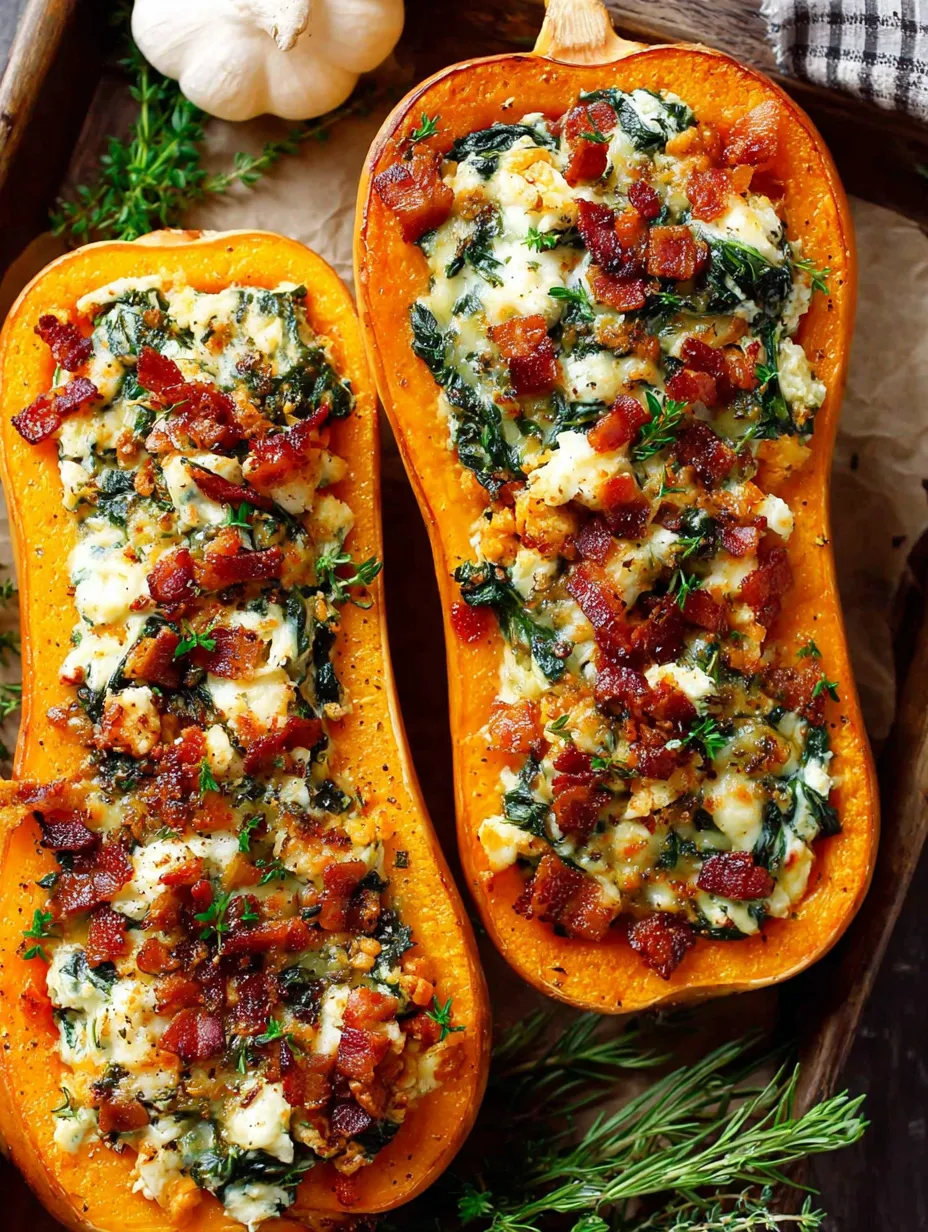
Stuffed Butternut Squash
- Total Time: 1 hour 10 minutes
- Yield: 4 halves 1x
Description
Alright, so imagine fall had a baby with comfort food and then that baby went to culinary school. That’s what we’re dealing with here. Stuffed Butternut Squash is basically taking those gorgeous orange gourds, roasting them until they’re caramelized and tender, then filling them with a savory mixture of quinoa (or rice, we’re flexible here), cranberries, pecans, and whatever other deliciousness your heart desires. It’s like edible autumn decoration that you can actually eat instead of just putting on your porch. I made this for Thanksgiving once as a vegetarian option and three meat-eaters fought over the last half. One of them was my dad, who once said vegetables were “just a waste of stomach space.” That’s the kind of conversion power this dish has.
Ingredients
For the Squash:
- 2 medium butternut squash (about 2–3 lbs each)
- 2 tbsp olive oil
- Salt and black pepper
- 1/2 tsp cinnamon (optional, but it adds that fall vibe)
For the Filling:
- 1 cup quinoa (or wild rice, farro, or regular rice—whatever floats your boat)
- 2 cups vegetable or chicken broth
- 2 tbsp olive oil or butter
- 1 medium onion, diced
- 3 cloves garlic, minced
- 2 cups chopped kale or spinach (stems removed)
- 1/2 cup dried cranberries
- 1/2 cup chopped pecans or walnuts, toasted
- 1/2 cup crumbled goat cheese or feta (optional but highly recommended)
- 1 tsp dried sage (or 1 tbsp fresh, chopped)
- 1/2 tsp dried thyme
- 1/4 tsp nutmeg
- Salt and pepper to taste
- 2 tbsp maple syrup (for that sweet-savory thing)
- Juice of half a lemon
For Topping:
- Extra goat cheese or feta
- Chopped fresh parsley or sage
- Drizzle of balsamic glaze (optional but fancy)
- More toasted nuts
Instructions
Step 1: Prep Those Squashes
Preheat oven to 400°F (200°C). Line a large baking sheet with parchment paper.
Cut each butternut squash in half lengthwise. This requires a sharp knife and some confidence. If the squash is being stubborn, microwave it for 2-3 minutes to soften slightly.
Scoop out the seeds and stringy bits with a spoon. Save the seeds if you want to roast them later—they’re like nature’s pepitas.
Brush the cut sides with olive oil and season generously with salt, pepper, and cinnamon if using.
Place cut-side down on the baking sheet.
Roast for 35-45 minutes until the flesh is fork-tender and starting to caramelize. The exact time depends on the size of your squash.
Flip them cut-side up for the last 5 minutes to let the edges get a little crispy.
Step 2: Make the Filling
While the squash is roasting, cook your quinoa (or grain of choice) according to package directions, using broth instead of water for extra flavor. Usually it’s 1 cup quinoa to 2 cups liquid, brought to a boil, then simmered covered for 15 minutes. Fluff with a fork and set aside.
Heat olive oil or butter in a large skillet over medium heat.
Add diced onion and cook for 5-7 minutes until soft and translucent.
Add garlic and cook for another minute until fragrant. Your kitchen should smell amazing right now.
Toss in the chopped kale or spinach and cook until wilted, about 3-4 minutes.
Add cooked quinoa, cranberries, toasted pecans, sage, thyme, nutmeg, salt, and pepper. Stir everything together.
Drizzle in maple syrup and lemon juice. The sweet and tangy combo is chef’s kiss.
Remove from heat and fold in the goat cheese if using. It’ll get all melty and creamy. This is correct.
Taste and adjust seasoning. Don’t be shy with the salt—grains need love.
Step 3: Stuff Like You Mean It
Once the squash halves are done roasting, use a fork to gently fluff up the flesh inside, creating little ridges. This helps the filling stick and adds more texture.
Pile the filling generously into each squash half. Really pack it in there—more is more.
Top with extra goat cheese or feta if you’re feeling it.
Return to the oven for 10-15 minutes to heat everything through and get a little golden on top.
Step 4: Finish and Serve
Pull these beauties out of the oven and let them cool for a few minutes.
Top with fresh herbs, extra toasted nuts, and a drizzle of balsamic glaze if you’re getting fancy.
Serve whole halves for a dramatic presentation, or slice each half into 2-3 pieces for easier eating.
Stand back and accept the inevitable compliments.
Notes
These are pretty much a complete meal, but if you want to round things out:
- Serve with a simple arugula salad dressed in lemon vinaigrette
- Add a side of roasted Brussels sprouts or green beans
- Pair with crusty bread for soaking up any extra filling
- Drizzle with tahini sauce for a Middle Eastern twist
- Top with a fried egg for breakfast-for-dinner vibes
- Prep Time: 20 minutes
- Cook Time: 50 minutes
Nutrition
- Calories: ~385 kcal
- Fat: ~15g
- Carbohydrates: ~56g
- Protein: ~12g