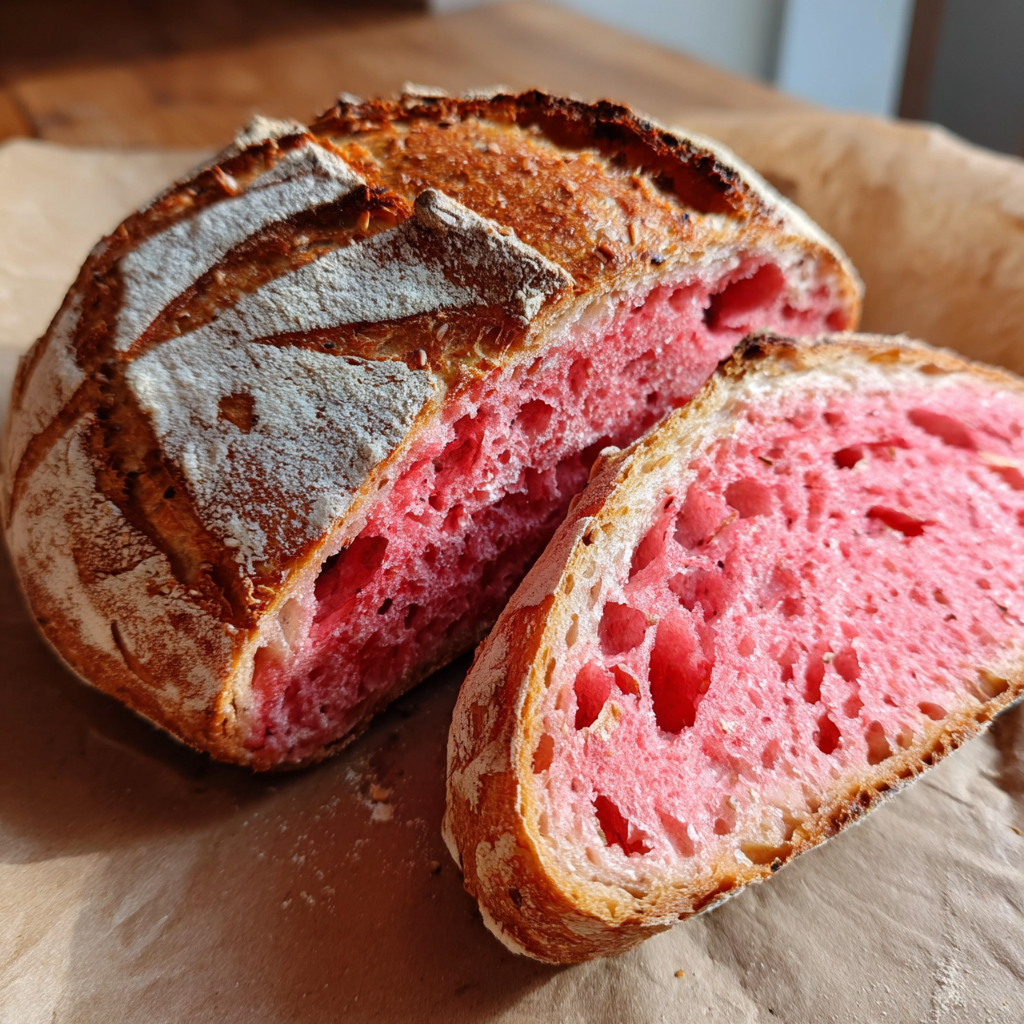
Discover the unique charm of Pink Sourdough Bread, naturally colored and flavored with vibrant dragon fruit powder. Perfectly crusty on the outside with a tender, airy crumb inside, this loaf brings a beautiful twist to a traditional sourdough.
This bread is a labor of love, requiring patience and careful fermentation that develops a complex flavor profile. Ideal for those who appreciate artisan baking and a pop of color on their table.
- The natural pink hue from dragon fruit powder creates visually stunning bread without artificial coloring.
- A classic sourdough fermentation brings depth of flavor and excellent texture.
- Vegetarian-friendly with simple, wholesome ingredients ideal for homemade baking.
Ingredients
- Dragon Fruit Powder: Provides a vibrant pink color and subtle fruity flavor, enhancing the bread’s appearance and taste.
- Bread Flour: High-protein flour essential for developing strong gluten strands that give structure and chew.
- Salt: Balances the sweetness and strengthens gluten, enhancing overall flavor and dough texture.
- Water: Hydrates the flour and activates the sourdough starter for fermentation.
- Active Sourdough Starter: A naturally fermented leavening agent that creates rise and contributes to complex flavor nuances.
Instructions
- Feed Your Starter the Night Before
Ensure your sourdough starter is lively and bubbly by feeding it the night prior. A robust starter is crucial for proper fermentation and rise.
- Mix Dry Ingredients
In a large bowl, whisk together bread flour, salt, and dragon fruit powder. This even distribution helps infuse color and seasoning uniformly.
- Combine Wet Ingredients
Whisk together water and the active starter separately until combined thoroughly. This activates the yeast cultures, preparing for fermentation.
- Form the Dough
Add dry ingredients to the wet mix and stir with a spatula until a rough, shaggy dough ball forms. This initial mix allows gluten development to begin.
- First Dough Rest
Cover the dough and let it rest for 30 minutes to hydrate the flour fully, which improves dough extensibility.
- Perform Stretch & Folds
Stretch and fold the dough by pulling one side about six inches and folding it over the dough ball, rotating bowl 1/4 turn between folds. This strengthens gluten structure and improves texture.
- Repeat Rest and Stretch & Folds
Let dough rest 20-30 minutes and repeat two more stretch and fold sets. This gradual gluten development is key for airy crumb and shape retention.
- Bulk Fermentation
Cover and ferment the dough at 72-74°F for 5-7 hours, or until volume grows by 50%. Signs of readiness include a slightly domed surface and bubbles.
- Shape the Dough
Turn dough onto floured surface, fold sides to center and gently spin to create a taut surface tension. This shaping step defines the loaf’s structure.
- Cold Proof
Place shaped dough in a banneton and refrigerate for 1 hour. The cold slows fermentation, improving flavor complexity and making the dough easier to handle.
- Preheat and Prepare
Preheat oven to 425°F. Transfer dough onto parchment paper, dust top with rice flour to prevent sticking and allow for a clean score.
- Score and Bake Covered
Using a sharp razor, score the bread to control expansion. Bake in a Dutch oven with lid on for 25 minutes to trap steam for crust development.
- Bake Uncovered
Remove lid and continue baking for 22-25 minutes until the crust turns lightly brown and crisp. This step ensures perfect crust caramelization.
- Cool and Slice
Let bread cool on a wire rack for 1-2 hours. Cooling completes the baking process, stabilizes crumb, and enhances flavor before slicing.
- Maintaining an active starter and correct fermentation temperatures are critical for consistent rise and texture.
- Using rice flour on the dough surface prevents sticking and allows easier handling during baking.
- Patience with resting and folding aids gluten development and flavor complexity.
Storage Tips
Store your Pink Sourdough Bread in a paper bag at room temperature to maintain crust crispness. For longer storage, slice and freeze the bread in airtight bags.
Serving Suggestions
This bread shines simply toasted with butter or cream cheese. It also pairs beautifully with soft cheeses, jams, or as colorful sandwich bread.
- Use a digital thermometer to monitor dough temperature during fermentation for optimal results.
- Baking in a preheated Dutch oven traps steam, ensuring a crisp crust and moist crumb.
- Adjust hydration slightly based on flour absorption and kitchen humidity for best dough consistency.
FAQs
- Can I substitute fresh dragon fruit for the powder?
Fresh dragon fruit has too much moisture and won’t provide the same color intensity. Powder is preferred for consistent results.
- What if my starter isn’t bubbly enough?
Feed your starter regularly for a few days in advance and keep it at a warm temperature to build strength before baking.
- Can I bake this bread without a Dutch oven?
Yes, but the crust may be less crisp. Use a baking stone and add a pan with water for steam in the oven instead.
- How long is the bulk fermentation if the room is warmer?
Warmer temperatures speed fermentation; reduce bulk time to prevent overproofing. Monitor dough rise closely.
- Is this bread gluten-free?
No, this recipe uses bread flour which contains gluten essential for structure and texture.
Pink Sourdough Bread
Equipment
- 1 large bowl
- 1 banneton
- 1 Dutch oven
- 1 sharp razor for scoring
- 1 spatula
Ingredients
- 2 tbsp dragon fruit powder
- 4 cups bread flour 500 grams
- 2 tsp salt 12 grams
- 1 1/2 cups water 350 grams
- 1/2 cup active sourdough starter 100 grams
- Rice flour for dusting
- Additional bread flour for kneading surface
Instructions
- Feed your sourdough starter the night before to ensure it is active and bubbly.
- In a large bowl, whisk together the bread flour, salt, and dragon fruit powder.
- In a separate bowl, whisk together the water and active sourdough starter.
- Combine the wet ingredients with the dry and stir with a spatula until a rough, shaggy dough forms.
- Cover the dough and let it rest for 30 minutes.
- Perform a stretch and fold by pulling one side of the dough upwards about six inches and folding it over the main ball, then rotate the bowl a quarter turn and repeat until a tight ball forms.
- Cover and let rest for 20-30 minutes.
- Repeat two additional sets of stretch and folds, each spaced 20-30 minutes apart.
- Cover the dough and allow it to bulk ferment at room temperature (72-74°F) for 5-7 hours until it grows by 50% and shows bubbles.
- Turn the dough onto a floured surface, fold each side into the center, and then flip the dough over, gently spinning it clockwise with both hands to build surface tension.
- Place the dough into a banneton and refrigerate for 1 hour.
- Preheat oven to 425°F. Transfer the dough on parchment paper and dust the top with rice flour.
- Score the dough with a sharp razor and place it in the Dutch oven.
- Bake covered for 25 minutes, then remove the lid and bake an additional 22-25 minutes until lightly browned.
- Cool bread for 1-2 hours before slicing.
Notes
- Ensure your sourdough starter is active for best results.
- Maintain the fermentation temperature between 72-74°F for optimal rise.
- Use rice flour to prevent sticking when handling the dough.