There’s nothing quite like a steaming plate of homemade pappardelle smothered in a rich, slow-cooked beef ragu. This traditional Italian comfort food fills your kitchen with inviting aromas and your heart with warmth, turning any dinner into a memorable occasion. Each wide ribbon of pappardelle is the perfect vessel for the tender beef and flavorful sauce, promising a satisfying bite every time.
Whether you’re concocting this dish for a family gathering or a cozy night in, the combination of slow-simmered beef chuck, fresh herbs, and robust red wine creates a deeply layered flavor that feels like a culinary hug. Let’s dive into making this classic that will surely become a staple in your meal rotation.
- Slow-cooked beef chuck creates melt-in-your-mouth tenderness and intense flavor.
- Homemade pappardelle perfectly absorbs the hearty ragu sauce for balanced bites.
- Rich layers of red wine and fresh herbs elevate the classic Italian flavors.
Ingredients
- Beef Chuck (2 lbs, cut into large chunks): A well-marbled cut that becomes tender and flavorful when slow-cooked to perfection.
- Pappardelle Pasta (1 lb): Wide, flat noodles designed to soak up and hold the thick, hearty meat sauce beautifully.
- Carrot (1 large, diced): Adds natural sweetness and a subtle depth that balances the acidity of the tomatoes.
- Celery (1 stalk, diced): Brings earthy undertones that layer well with the other aromatic vegetables.
- Onion (1 large, diced): Provides a savory base flavor essential for building a rich, complex sauce.
- Garlic (4 cloves, minced): Infuses the ragu with aromatic richness and a touch of pungency.
- Tomato Paste (2 tablespoons): Concentrates the tomato flavor and adds a slight sweetness and thickness.
- Crushed Tomatoes (28 oz can): Forms the core of the sauce, using high-quality canned tomatoes for the best natural flavor.
- Beef Broth (2 cups): Enriches the sauce base and helps tenderize the beef during slow cooking.
- Red Wine (1 cup): Incorporates deep, robust flavors; choose a dry red you enjoy drinking.
- Bay Leaves (2): Impart subtle herbaceous notes that develop complexity with slow simmering.
- Fresh Rosemary or Thyme (1 sprig): Adds fresh aromatic depth to the sauce.
- Olive Oil (2 tablespoons): Used for sautéing vegetables and browning the beef to develop flavor.
- Salt and Pepper (to taste): Essential for seasoning and balancing flavors throughout the cooking process.
- Parmesan Cheese (for garnish, optional): Freshly grated cheese adds a salty, nutty finish enhancing each bite.
Instructions
- Heat and Sear the Beef
Warm olive oil in a Dutch oven over medium-high heat. Season beef chunks with salt and pepper, then sear on all sides until golden brown, about 3-4 minutes each side. This step locks in juices and builds a deep caramelized flavor foundation for the ragu.
- Sauté Aromatic Vegetables
In the same pot, add diced onion, carrot, and celery. Cook on medium heat until softened, about 5-7 minutes, allowing their natural sweetness to develop. Stir in minced garlic and tomato paste, cooking 1-2 minutes for fragrant aromatic depth and to intensify the tomato flavor.
- Deglaze with Red Wine
Pour in red wine, scraping the pot’s bottom to release browned bits. Simmer for 2-3 minutes to reduce slightly, concentrating flavor while adding richness and balancing acidity.
- Build the Sauce Base
Add crushed tomatoes, beef broth, bay leaves, and fresh rosemary or thyme. Return seared beef to the pot, ensuring it is submerged in the liquid. This combination creates a flavorful braising environment that tenderizes the beef while melding all components.
- Simmer Slowly for Tenderness
Cover the pot and reduce heat to low. Allow to cook gently for 2-3 hours, stirring occasionally. This slow cook method softens the beef until fork-tender while thickening the sauce for a rich consistency. Shred the beef with forks and stir it back into the sauce for even dispersal.
- Cook Pappardelle Pasta
Bring a large pot of salted water to a rolling boil. Cook pappardelle until al dente following package instructions. Reserve ½ cup pasta water before draining to adjust sauce consistency later.
- Toss Pasta with Meat Sauce
Combine pappardelle with tender beef ragu, adding reserved pasta water as needed to loosen the sauce and coat the noodles evenly. Serve immediately with an optional sprinkle of freshly grated Parmesan for a perfect finishing touch.
- Slow cooking is essential for tender beef and deeply developed flavors in the sauce.
- Use high-quality canned tomatoes and wine for the best authentic Italian taste.
- Reserving pasta water enhances sauce texture and helps it cling to the noodles.
Storage Tips
Store leftover ragu and cooked pasta separately in airtight containers in the refrigerator for up to 3 days. Reheat gently on the stove, adding pasta water if needed to restore sauce texture.
Serving Suggestions
Pair this hearty dish with a crisp green salad and crusty Italian bread to soak up extra ragu. A glass of the same red wine used in cooking perfectly complements the flavors.
- Sear the beef in batches if necessary to avoid overcrowding and ensure proper browning.
- For a smoother sauce, partially crush the meat into smaller pieces after shredding for even distribution.
- Customize herbs to taste; oregano or basil can add additional Italian flair.
FAQs
- Can I use a different cut of beef?
Yes, brisket or short ribs also work well for slow cooking due to their marbling and tenderness when braised.
- Can I make this recipe in a slow cooker?
Absolutely. Brown the beef and sauté vegetables first, then transfer everything to a slow cooker and cook on low for 6-8 hours.
- Is it necessary to use red wine?
Wine adds depth but can be substituted with extra beef broth or a splash of balsamic vinegar for acidity if preferred.
- How do I prevent the pasta from sticking?
Stir pasta occasionally during boiling and use plenty of salted water. Toss with sauce immediately after draining.
- Can I prepare the sauce ahead of time?
Yes, ragu flavors deepen overnight in the fridge. Gently reheat before serving.
- What can I substitute for fresh rosemary or thyme?
Dried herbs can be used at about one-third the amount, added earlier in cooking to release flavors.
- Can I freeze the leftover ragu?
Yes, cool completely then freeze in portioned containers for up to 3 months.
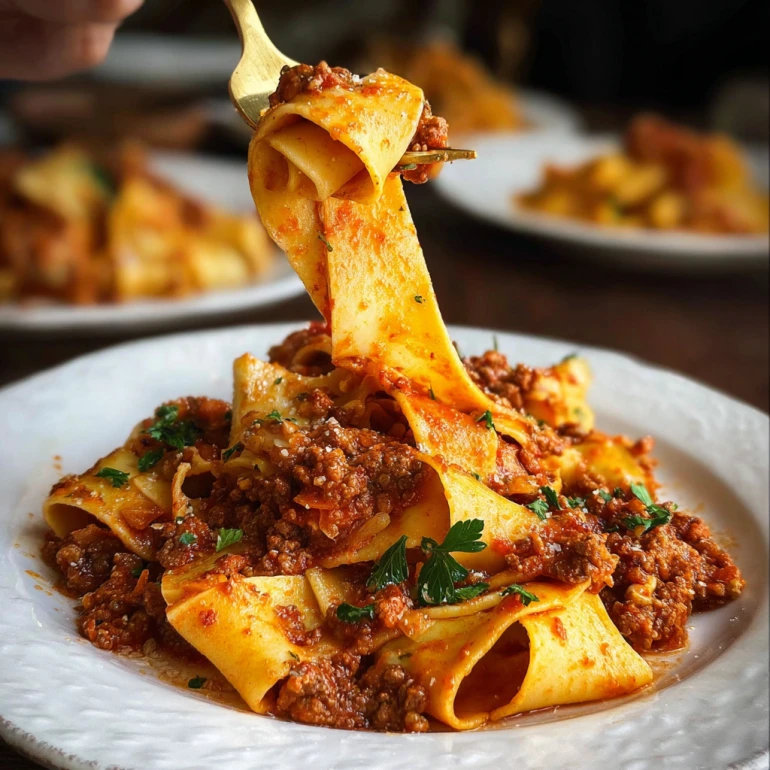
Homemade Pappardelle Meat Sauce
Equipment
- 1 Dutch oven or large heavy-bottomed pot
- 1 large pot for cooking pasta
- 1 wooden spoon for stirring
- 1 Tongs or forks for shredding beef
- 1 Grater for Parmesan cheese
Ingredients
- 2 lbs beef chuck cut into large chunks
- 1 lb pappardelle pasta
- 1 large carrot diced
- 1 stalk celery diced
- 1 large onion diced
- 4 cloves garlic minced
- 2 tablespoons tomato paste
- 28 oz can crushed tomatoes
- 2 cups beef broth
- 1 cup dry red wine
- 2 bay leaves
- 1 sprig fresh rosemary or thyme
- 2 tablespoons olive oil
- Salt and pepper to taste
- Parmesan cheese freshly grated (optional, for garnish)
Instructions
- Heat olive oil in a large Dutch oven over medium-high heat. Season beef chunks with salt and pepper and sear on all sides until browned, about 3-4 minutes per side. Remove and set aside.
- In the same pot, sauté diced onion, carrot, and celery until softened, about 5-7 minutes. Add minced garlic and tomato paste, stirring for 1-2 minutes until fragrant.
- Pour in red wine and scrape browned bits from the pot bottom. Simmer for 2-3 minutes to reduce slightly.
- Add crushed tomatoes, beef broth, bay leaves, and rosemary or thyme. Return seared beef to the pot, ensuring it is submerged in the sauce.
- Cover and reduce heat to low. Simmer gently for 2-3 hours, stirring occasionally, until beef is fork-tender and sauce thickened. Shred beef with forks and mix back into sauce. Adjust seasoning.
- Bring a large pot of salted water to boil. Cook pappardelle according to package until al dente. Reserve ½ cup pasta water before draining.
- Toss cooked pappardelle with meat sauce, adding reserved pasta water if needed. Serve hot, garnished with grated Parmesan cheese if desired.
Notes
- Use well-marbled beef chuck for tenderness and flavor.
- Reserve pasta water to adjust sauce consistency.
- Leftovers keep well refrigerated for up to 3 days.
- Freeze portioned leftovers for up to 3 months.
- Substitute thyme if rosemary is unavailable.