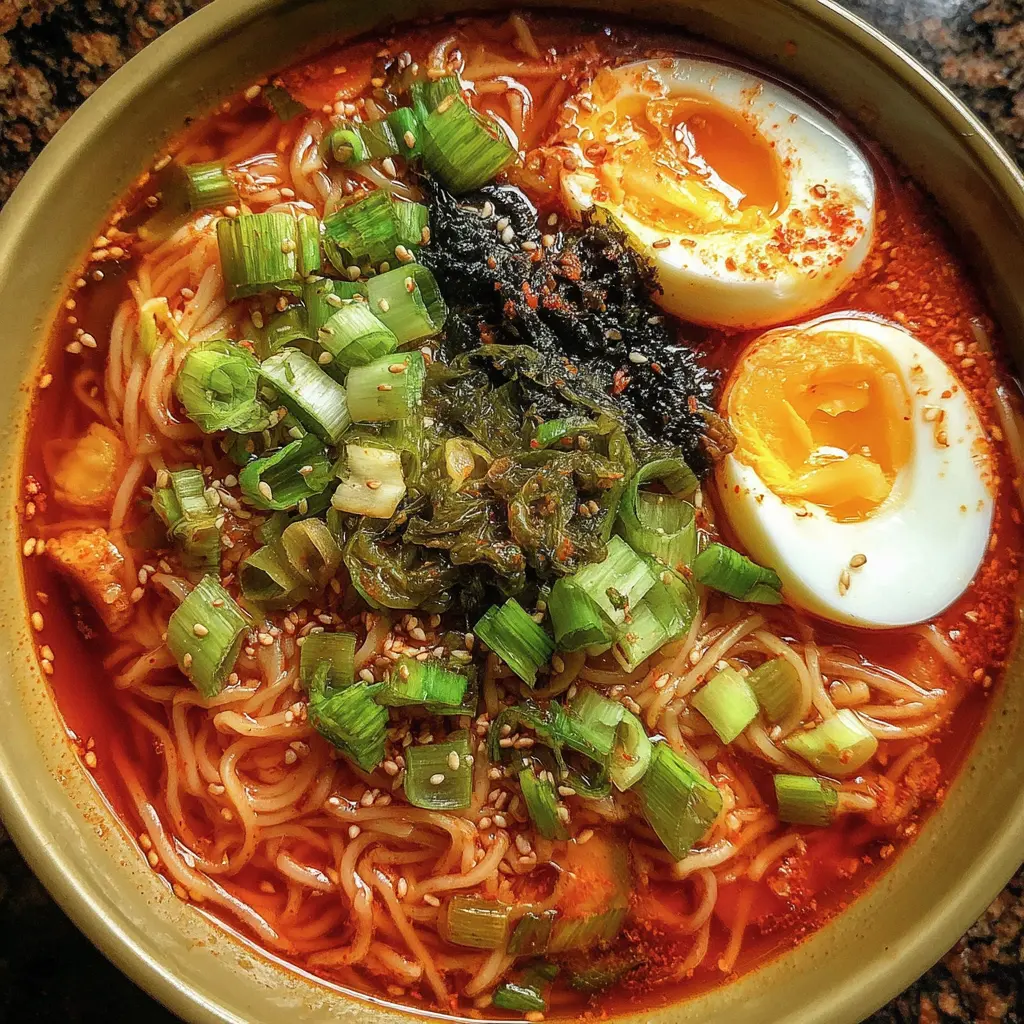
Experience the vibrant flavors of Korea with this Spicy Gochujang Noodle Soup, a comforting bowl filled with bold, savory, and slightly sweet notes. This quick and easy meal bursts with the deep umami of gochujang and oyster sauce, balanced perfectly with aromatic garlic and fresh green onions.
Designed to be ready in under 30 minutes, this soup is perfect for chilly days or whenever you crave a hearty, flavorful bowl of noodles. Topped with a silky boiled egg, toasted sesame seeds, and a drizzle of chili oil, every spoonful offers a warm and satisfying taste sensation.
- Quick and simple to prepare, perfect for busy weeknights.
- Rich layers of umami from gochujang and oyster sauce deliver incredible depth.
- Customizable spice level to suit your preference.
- A comforting, protein-packed meal with wholesome noodles and eggs.
Ingredients
- Garlic (1 clove, finely minced): Adds aromatic warmth and a subtle spicy kick, essential for authentic depth.
- Green onion (1 stalk, diced; white and green parts separated): The white parts provide a sharp, savory crunch while the green tops add freshness and color.
- Sugar (1 teaspoon): Balances the spiciness and acidity, rounding out the flavors harmoniously.
- Gochujang (1 tablespoon): Korean red chili paste that delivers bold heat, a hint of sweetness, and fermented umami.
- Oyster sauce (2 tablespoons): Deeply savory condiment adding richness and complexity to the soup base.
- Light soy sauce (0.5 tablespoon): Brings saltiness and enhances the overall savory profile without overpowering.
- Rice vinegar (0.5 tablespoon): Introduces bright acidity that lifts the dish and balances richness.
- Broth (360 millilitres; chicken, beef, or vegetable): Forms the flavorful liquid base; choose according to dietary choice and taste preference.
- Wheat noodles (1 portion, cooked and drained): Provides satisfying texture and heartiness, perfect for soaking up the broth.
- Boiled egg (1 jammy or hard-boiled, halved): Adds creamy richness and protein, complementing the bold broth flavors.
- Sesame seeds: Toasted garnish that adds nutty aroma and subtle crunch to each bite.
- Chili oil: Optional drizzle for an extra layer of heat and fragrant oiliness.
Instructions
- Boil and Prepare Noodles
Cook the wheat noodles following the package directions until tender but still firm. Drain thoroughly to avoid excess water that could dilute the soup’s flavor. Set aside the noodles to keep warm while you prepare the broth.
- Infuse Garlic and Green Onions with Hot Oil
Combine the minced garlic, diced white and green parts of the onion, and sugar in a heatproof bowl. Heat a tablespoon of neutral oil in a saucepan over high heat until smoking hot (about 1–2 minutes). Carefully pour the hot oil over the mixture, gently cooking the aromatics and releasing their flavors to create a fragrant base for your soup.
- Mix in Flavorful Sauces
Add gochujang, oyster sauce, light soy sauce, and rice vinegar directly into the bowl with the infused aromatics. Stir well to combine, allowing the sticky gochujang to dissolve evenly and the sauces to marry into a vibrant paste that will form the soul of your soup.
- Incorporate Hot Broth
Pour the heated broth into the bowl and whisk everything together until smooth and cohesive. The hot liquid melds the flavors and ensures the sauces fully dissolve, resulting in a rich and spicy broth that’s packed with umami.
- Assemble and Serve
Add the cooked noodles into the broth and gently mix to coat them in the flavorful soup. Plate the noodles and broth in bowls, then garnish with halved boiled eggs, a sprinkle of toasted sesame seeds, the green tops of spring onions for freshness, and a drizzle of chili oil for an optional kick. Serve immediately while piping hot for the best experience.
- This soup is highly adaptable: adjust gochujang amounts for milder or spicier results.
- Vegetarian options are simple by swapping oyster sauce with mushroom-based alternative and using vegetable broth.
- Leftover soup can be refrigerated and reheated gently, but noodles may absorb liquid over time.
Storage Tips
Store leftovers in an airtight container in the refrigerator for up to 2 days. Keep noodles separate if possible to prevent sogginess, then combine and reheat gently on the stovetop or in the microwave for best texture.
Serving Suggestions
Enjoy this noodle soup alongside kimchi or pickled vegetables for a traditional Korean touch. A crisp side salad or steamed greens can also complement the spicy broth beautifully to round out the meal.
- To elevate flavor, toast sesame seeds lightly before garnishing to enhance their nuttiness.
- Use fresh homemade broth if available for deeper complexity.
- When pouring hot oil over aromatics, be cautious to avoid splattering and burns.
FAQs
- Can I use gluten-free noodles?
Yes, substituting wheat noodles with gluten-free varieties like rice or sweet potato noodles works well.
- How can I reduce the spiciness?
Simply decrease the amount of gochujang or omit chili oil drizzle to suit your heat preference.
- Is this soup suitable for vegetarians?
Use vegetable broth and replace oyster sauce with vegetarian alternatives to make this recipe fully vegetarian.
- Can I prepare this soup in advance?
You can mix the broth base ahead, but add noodles and garnishes just before serving to maintain texture.
- What type of egg should I use?
Both jammy (soft-boiled) and hard-boiled eggs work well; jammy eggs add a creamy richness to the broth.
- Can I add protein like chicken or tofu?
Yes, grilled chicken slices or pan-fried tofu cubes can be added for an extra protein boost.
- What is the best way to serve leftover soup?
Reheat gently and refresh noodles separately to avoid them becoming mushy in leftovers.